Serene Sanctuary: A Mood Board Guide to Japandi Design
Japandi is the perfect marriage of two design philosophies: the functional warmth of Scandinavian hygge and the minimalist tranquility of Japanese wabi-sabi. The result is a style that is clean, calming, and deeply rooted in natural materials, muted colors, and intentional craftsmanship.
This guide demonstrates how to apply this serene, minimalist-yet-warm aesthetic to your kitchen, bedroom, living room, and bathroom.
Intentional Living: Japandi Kitchen Inspiration
The Japandi kitchen prioritizes simplicity, raw texture, and the celebration of everyday objects.
Key Elements:
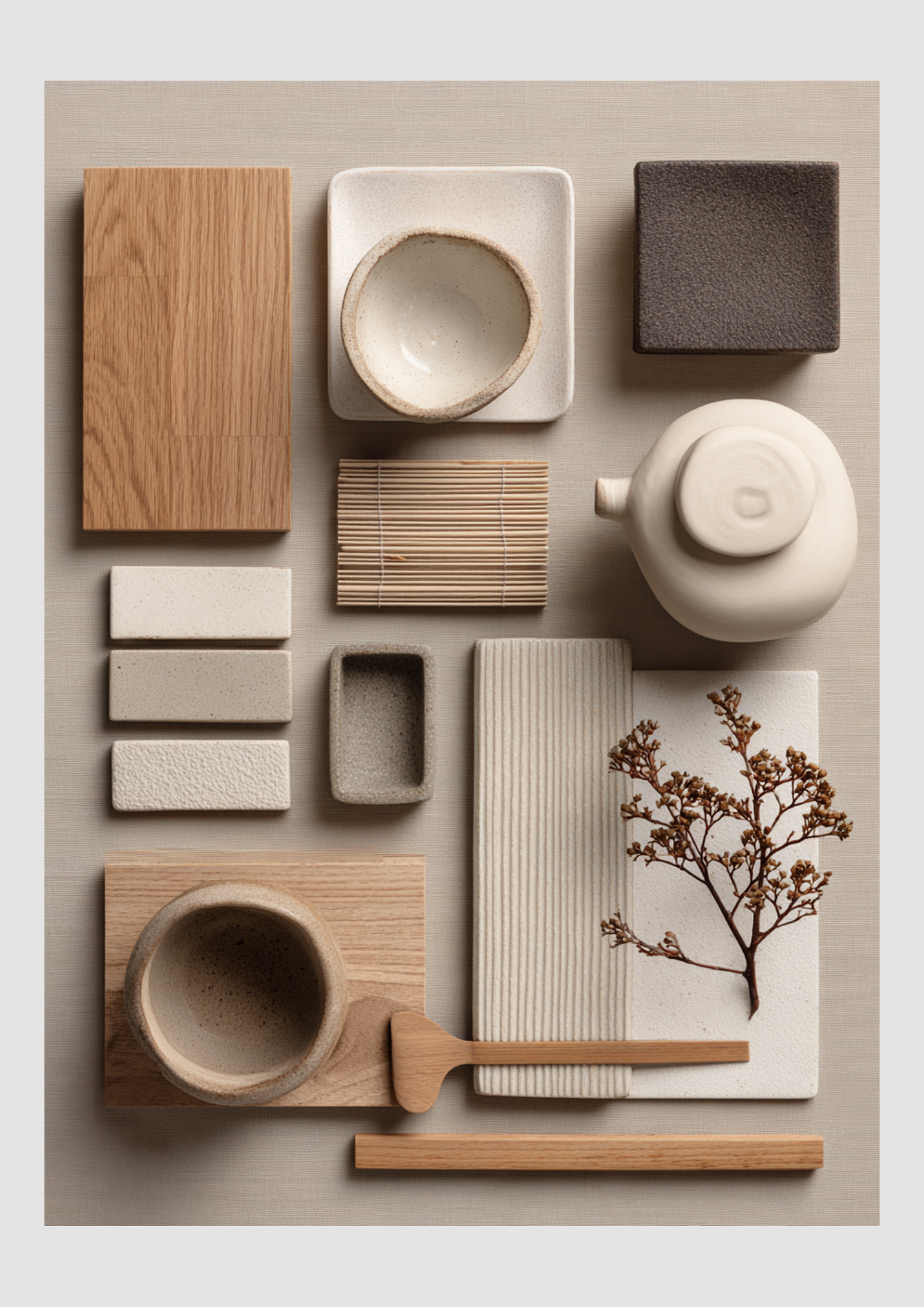
Light Woods: The primary material is light oak or blonde wood, used for cabinet fronts, cutting boards, and accessories. The wood should feel raw, not highly polished.
Wabi-Sabi Pottery: Display handcrafted, slightly imperfect ceramic and clay bowls and teapots in soft, matte finishes (off-white, cream, pale grey). The imperfections add character.
Muted, Earthy Tones: The color palette is strictly neutral: off-white, bone, sand, and taupe, with a possible accent of dark charcoal or black for contrast.
Minimalist Texture: Introduce texture through woven elements (like a bamboo mat), ridged or ribbed surfaces (for backsplashes or cabinet panels), and coarse, matte stone.
Clutter-Free Surfaces: The key to this look is extreme minimalism. Keep countertops clear, allowing the materials themselves to be the art.
Earthy & Restorative: Japandi Bedroom Retreat
The bedroom is designed as a calm, restorative space, emphasizing low-profile forms and natural, tactile comfort.
Key Elements:
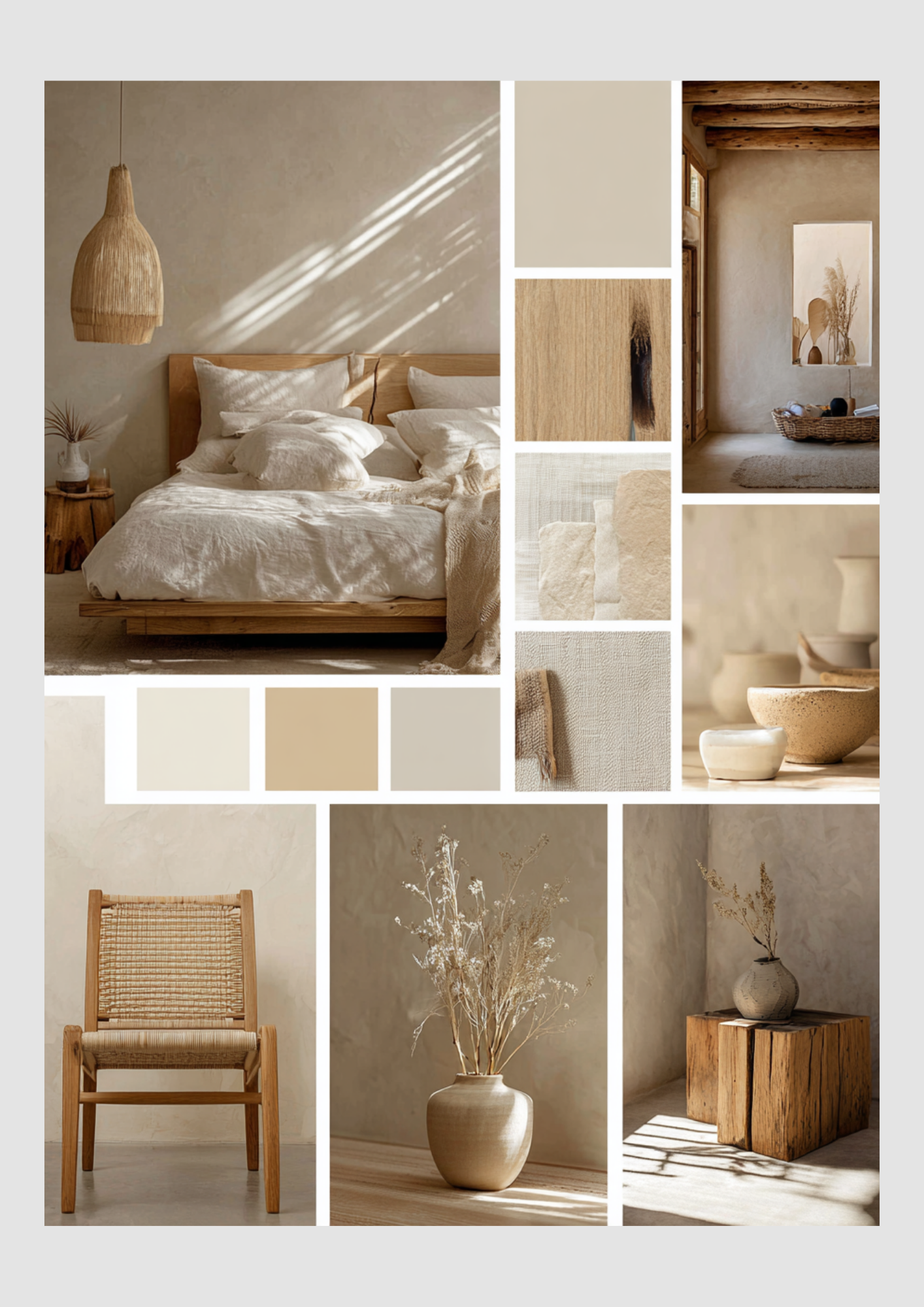
Low-Profile Furniture: The bed should be a simple, low-lying wooden platform frame. This mimics traditional Japanese design, fostering a closer connection to the ground.
Layers of Linen: Bedding is done in cream, beige, or off-white linen with subtle, natural wrinkling. Layering throws and pillows in similar, muted tones adds Scandinavian softness.
Textured Walls: Walls are finished in a matte, textured plaster or paint—no stark white. The gentle shadows and natural imperfections enhance the wabi-sabi feel.
Woven Accents: Lighting fixtures, like a large, low-hanging pendant made of woven rattan or wicker, introduce an organic, gentle texture and cast beautiful shadows.
Natural Decor: Decor is minimal: simple, large ceramic vases and small, rustic wooden stump side tables.
Balanced Harmony: Japandi Living Room Style
The Japandi living room is an airy, light-filled space where every object is functional, beautiful, and in balance.
Key Elements:
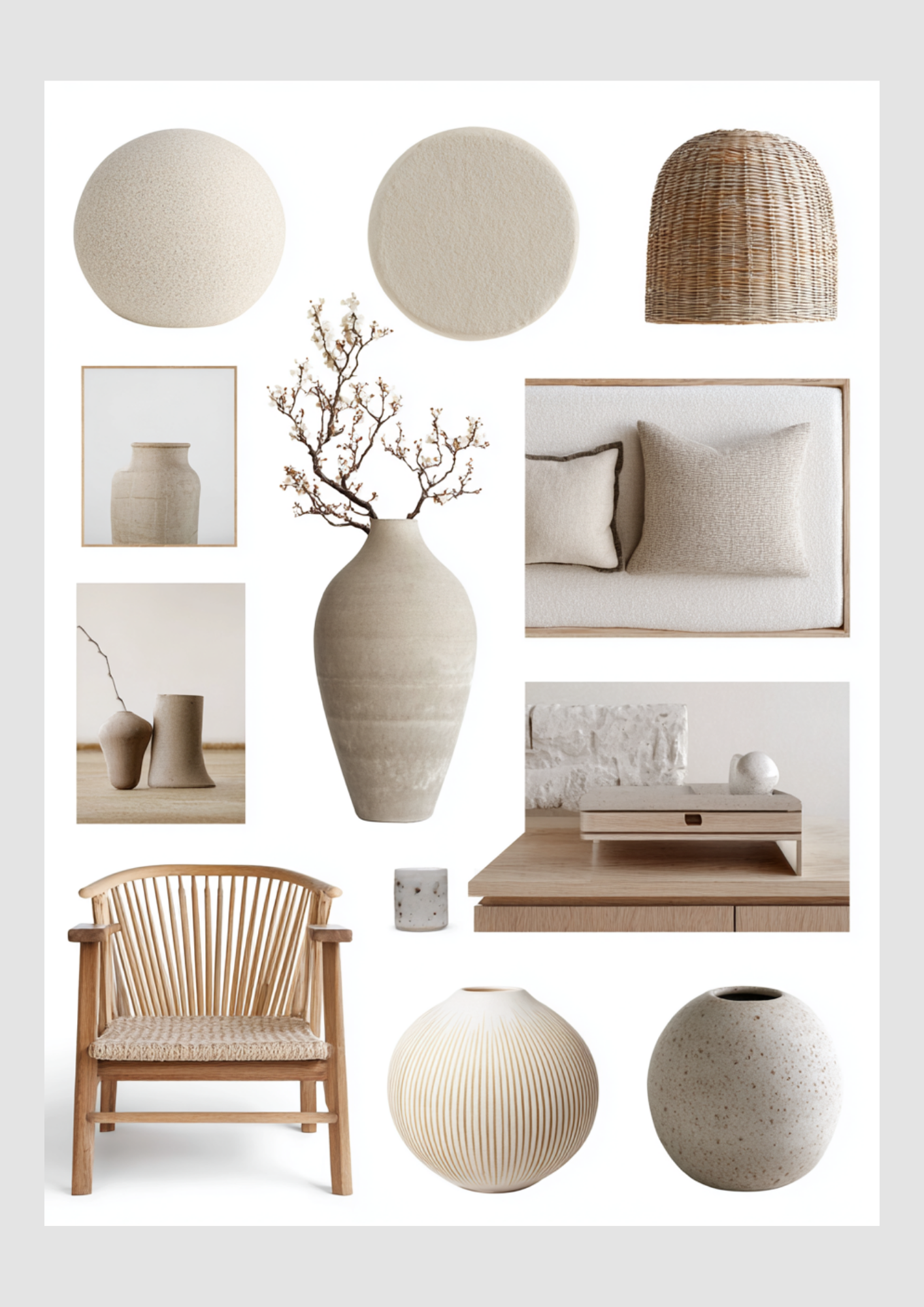
Simple, Sculptural Seating: Choose wooden armchairs with clean lines and natural woven seats (like rattan or paper cord). Upholstered pieces are low-slung and covered in neutral, textured fabrics.
Curated Ceramics: Use handcrafted vases and pottery in oversized, sculptural shapes. These become the artistic focal point against the neutral backdrop.
Natural Light: Maximize natural light. Window coverings should be sheer or non-existent to keep the room bright and airy.
Subtle Floral Elements: A simple branch of delicate, dried flowers or cherry blossoms in a large, unglazed vase provides a touch of natural elegance without fuss.
Soft Textures: Use wool or cotton rugs in cream or beige, often with a simple fringe, to add warmth and define the space.
Calm & Clean: Japandi Bathroom Design
The bathroom is a spa-like area that celebrates natural stone, wood, and clean lines.
Key Elements:
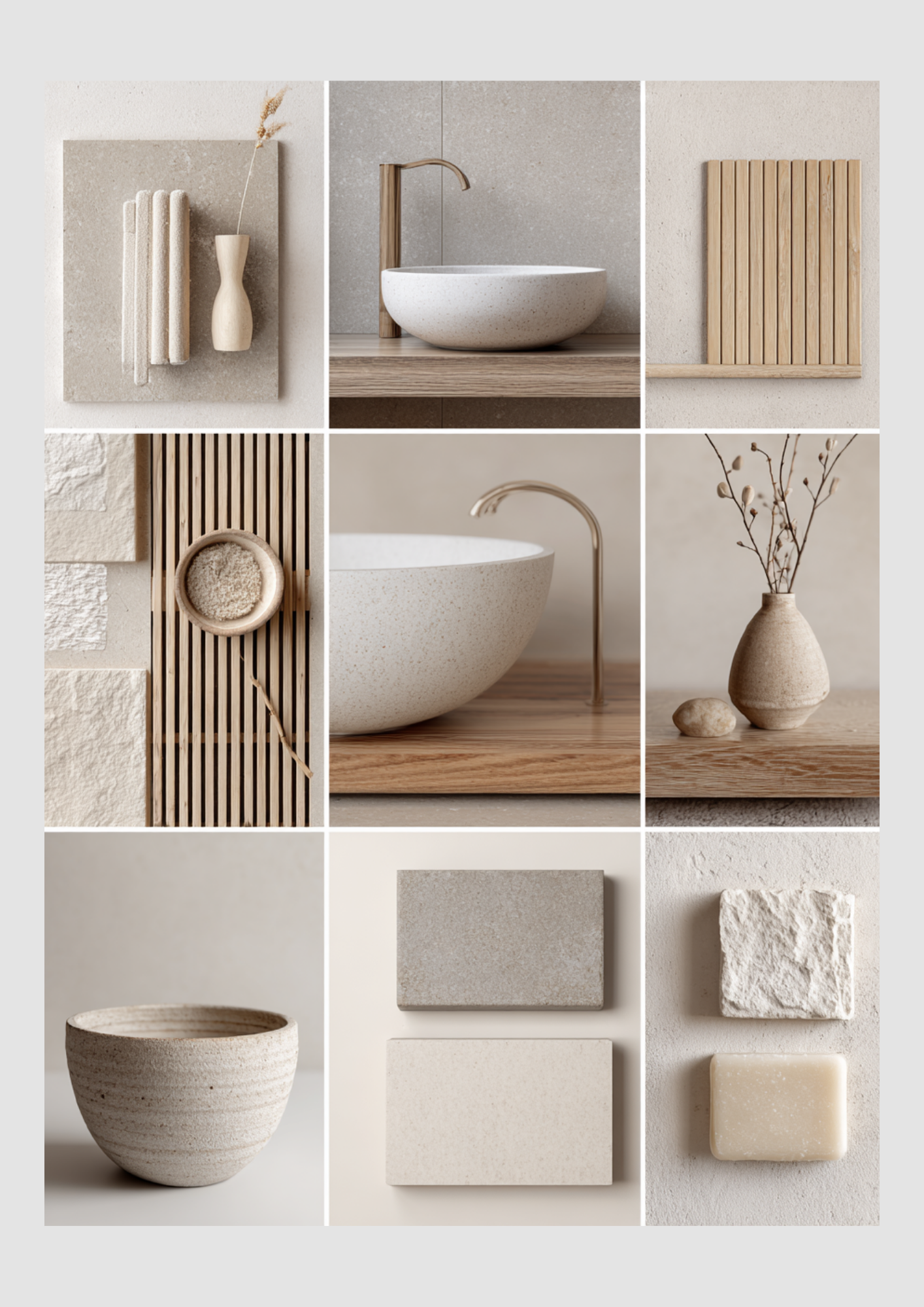
Stone & Concrete Finishes: Use matte, light beige or grey stone for floors and walls. Look for finishes that have a raw, slightly rough texture.
Clean Wood Accents: Incorporate slatted or ribbed wood panels as wall accents or vanity fronts. The slats add visual rhythm and warmth.
Minimalist Basin: A simple, smooth, speckled, or matte white bowl sink rests directly on the wooden vanity top.
Aged Brass Fixtures: Faucets and hardware in a subtle, brushed brass or soft gold finish add a touch of quiet refinement without the formality of polished chrome.
Organic Accessories: Decorate sparingly with handmade soap bars, small wooden vases, and simple, dried grasses.
By focusing on light woods, raw textures, a neutral color palette, and a commitment to essentialism, you can create a beautiful and calming Japandi home that fosters a sense of peace and balance.