1920s-1930s Interior Design Trends
The period from 1920 to 1930 represents one of the most transformative eras in interior design. It was a decade of sharp contrasts: the birth of high-glamour Art Deco and the rise of industrial, functionalist Modernism (Bauhaus).
While the 1920s focused on optimism and luxury, the transition into the 1930s (the Great Depression era) saw styles become more streamlined and practical.
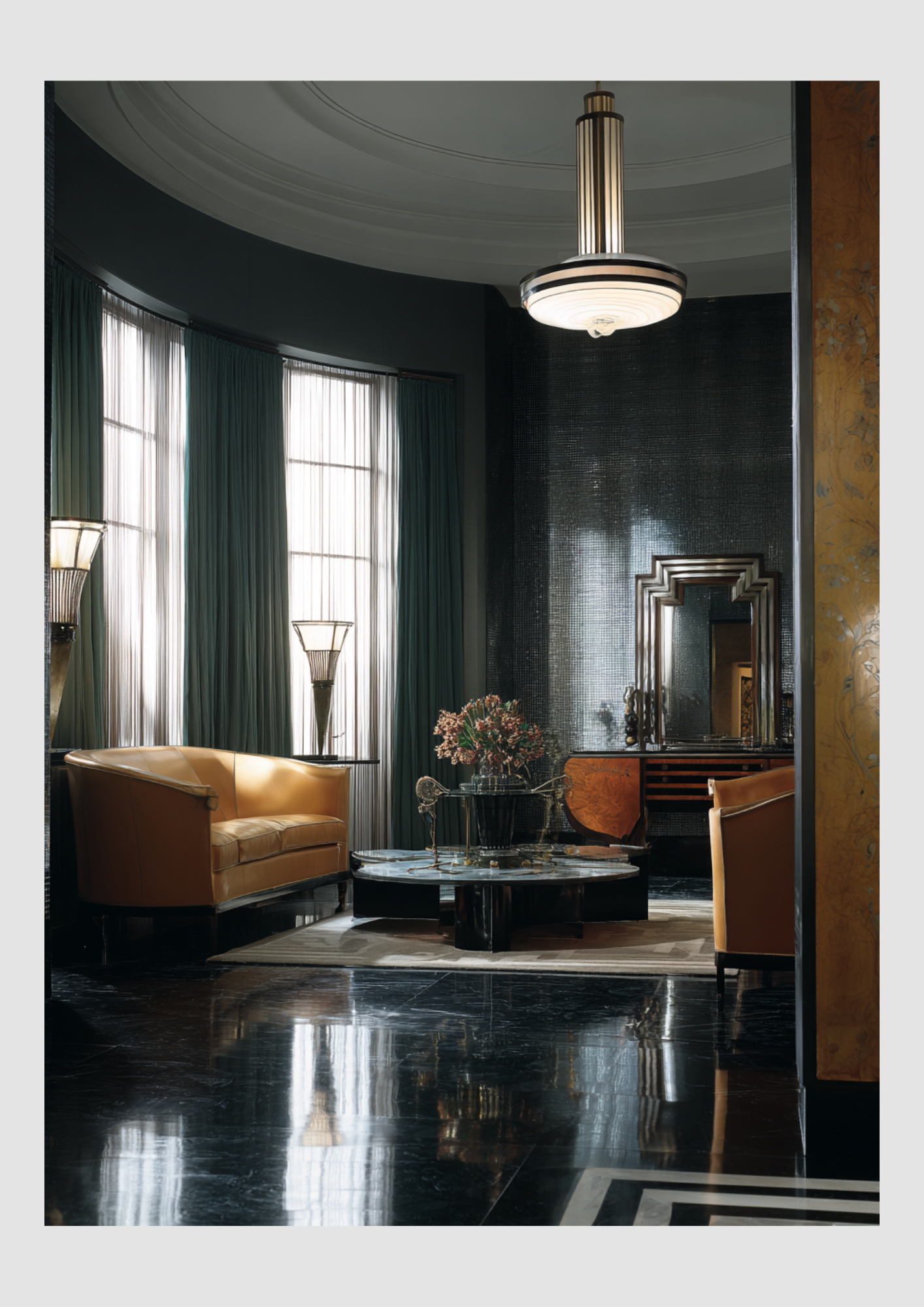
1. Art Deco: The Height of 1920s Glamour
Art Deco was the defining "look" of the Roaring Twenties. It celebrated the "Machine Age" with sleek surfaces and exotic materials.
Key Motifs: Sunbursts, zigzags (chevrons), fan shapes, and stepped silhouettes (inspired by the emerging New York skyscrapers).
Luxurious Materials: Designers used "exotic" woods like ebony and zebrawood, alongside chrome, glass, mirrors, and marble.
Color Palette: High-contrast combinations like black and gold, silver and chrome, or deep jewel tones (emerald, ruby, and sapphire) against cream or beige.
Furniture: Large-scale, symmetrical pieces with lacquered finishes and plush upholstery like velvet or silk.
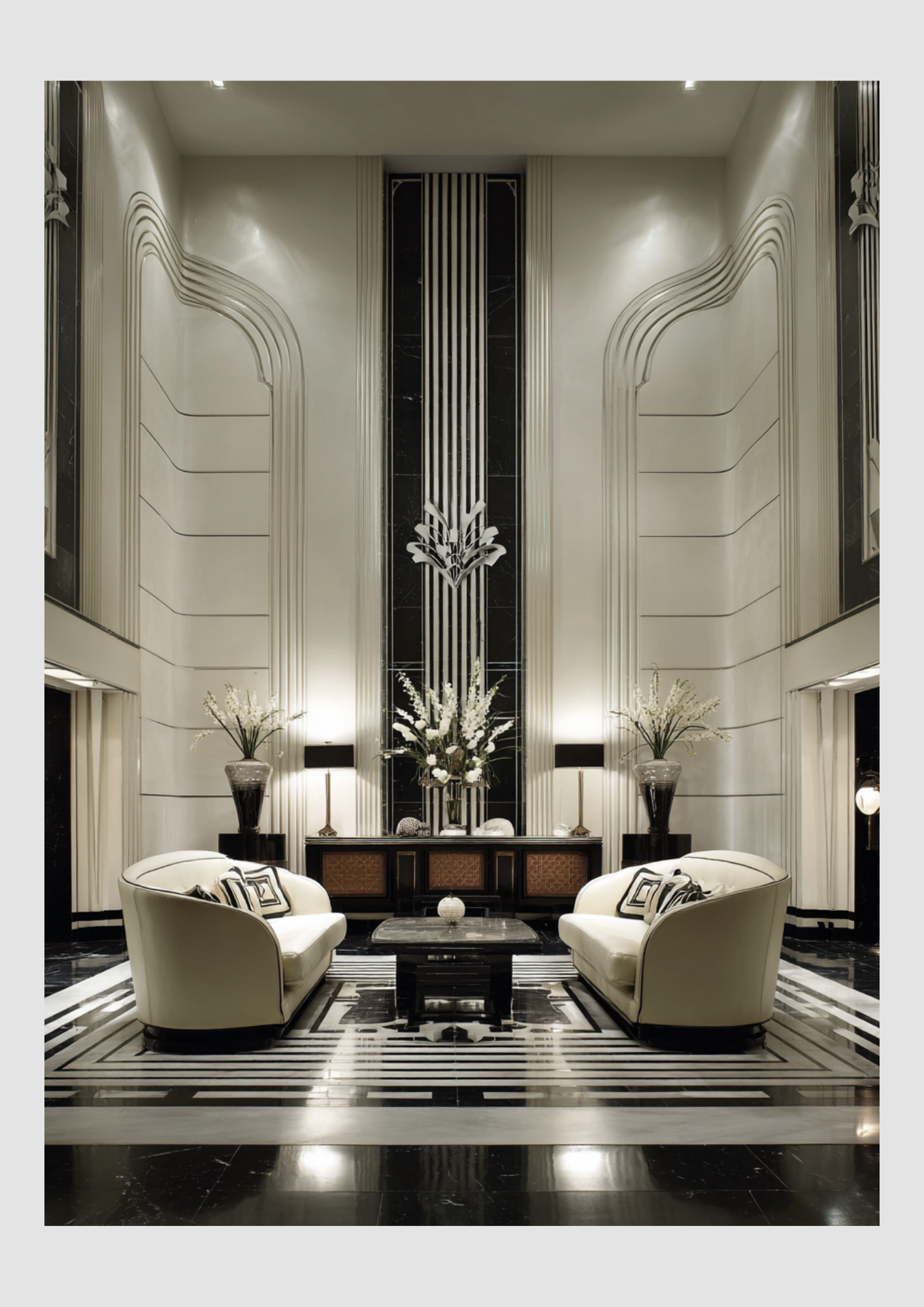
2. Bauhaus & Modernism: Form Follows Function
While Art Deco was about decoration, the Bauhaus school in Germany (founded 1919) pushed for a radical "stripping away" of ornament.
Philosophy: Functionality was paramount. If a piece didn't serve a purpose, it shouldn't be there.
Materials: This era introduced the first widespread use of tubular steel (like the famous Wassily Chair), plywood, and reinforced concrete in home design.
Primary Colors: Unlike the jewel tones of Art Deco, Modernism favored the basics: Red, Blue, and Yellow, often set against white or gray walls.
Open Floor Plans: For the first time, architects and designers began moving away from "boxy" rooms toward open, airy living spaces.
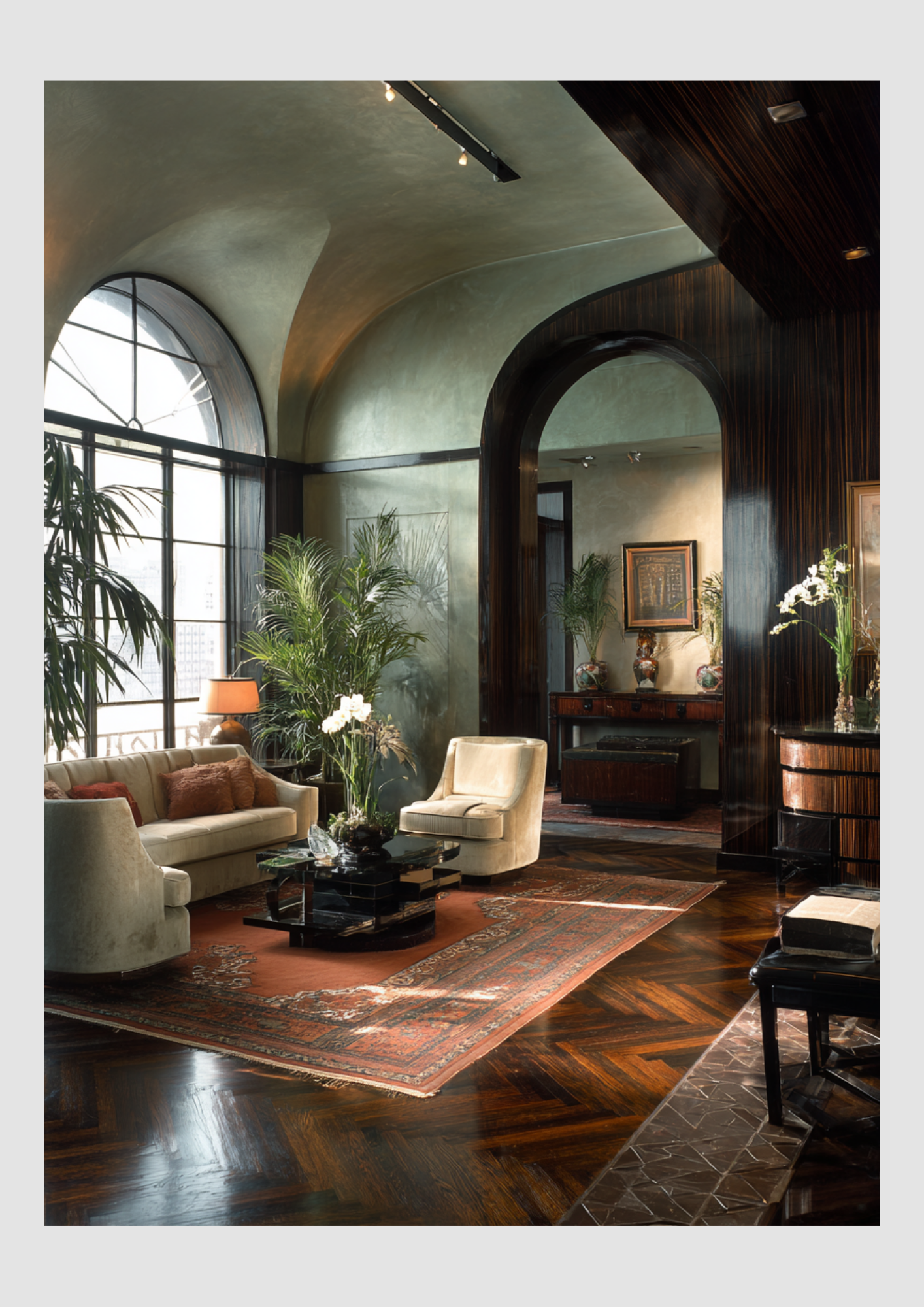
3. The Transition to 1930s "Streamline Moderne"
As the world entered the 1930s and the Great Depression, the opulence of Art Deco softened into a more aerodynamic, "faster" look known as Streamline Moderne.
Curved Lines: Hard geometric angles were replaced by long horizontal lines and rounded "bullet" corners.
Nautical Influence: Interiors often looked like the inside of a luxury ocean liner or a sleek airplane.
Kitchen Innovation: This was the decade the kitchen became a design focus. We saw the rise of linoleum flooring (often in checkerboard), built-in "breakfast nooks," and the first colorful enameled appliances.
Minimalism for Economy: Due to the economic crash, homes became more sparsely furnished, emphasizing clean lines and durable materials like wood and steel over expensive silk and gold leaf.
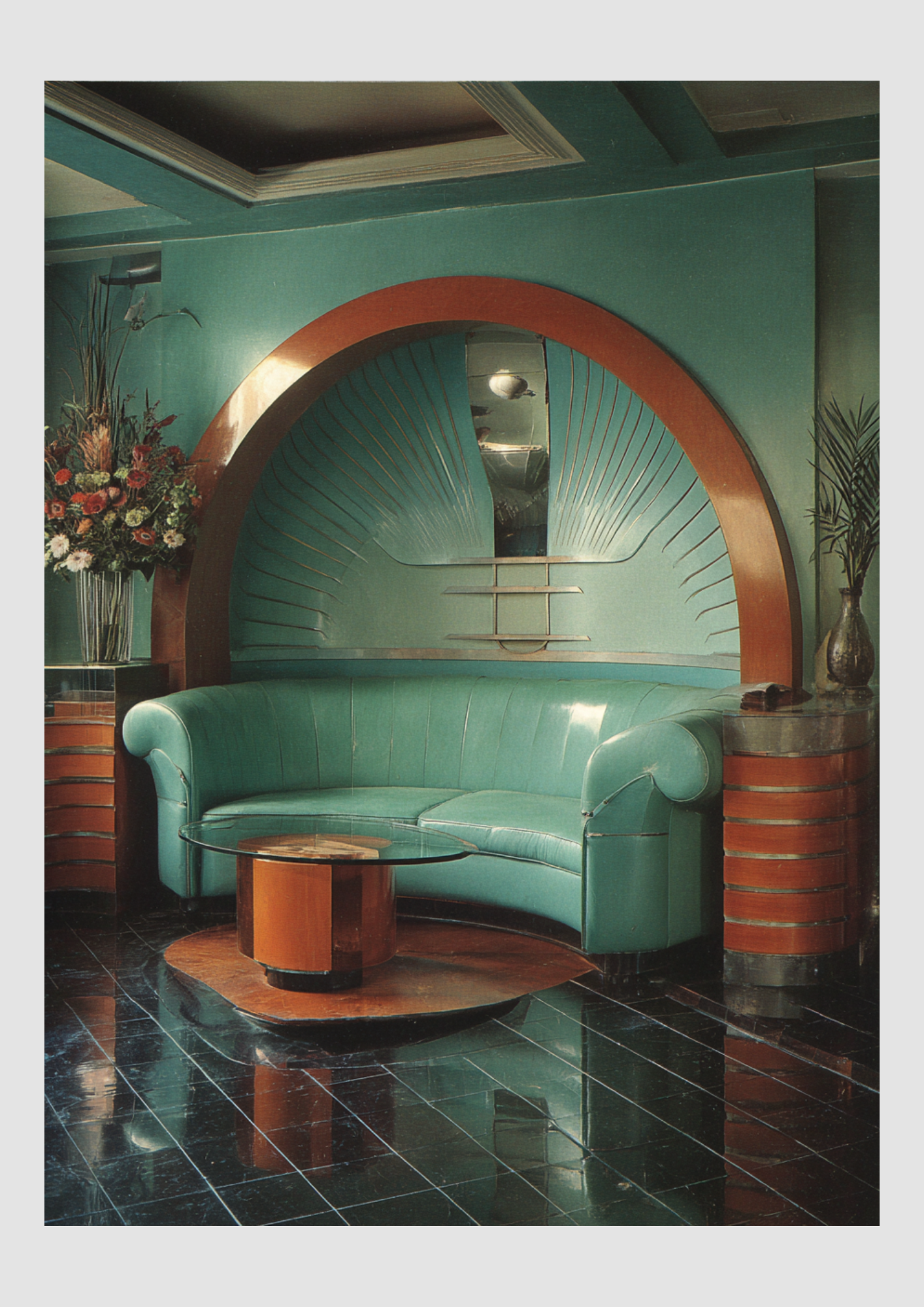
Quick Comparison
1920s (High Art Deco)
Main: Vibe Opulent, Bold, Theatrical
Shapes: Sharp Zigzags, Triangles
Metals: Polished Brass, Gold Leaf
Colors: Deep Jewels, Black & Gold
Flooring: Parquet, Geometric Rugs
1930s (Streamline Moderne):
Main: Aerodynamic, Practical, Softened
Shapes: Long Horizontals, Curves
Metals: Chrome, Stainless Steel
Colors: Muted Neutrals, Pale Blues/Pinks
Flooring: Linoleum, Checkerboard Tile
